




World of Tanks is a game built on armor, firepower, and mobility — but beneath the surface lies a far more subtle and misunderstood system: vision control. Spotting mechanics determine who sees whom, who fires safely, and who gets deleted before they even understand what happened. For many players, vision control feels mysterious or unfair, yet it is the backbone of high‑level play.
This article explores the vision control crisis in World of Tanks, analyzing how spotting mechanics shape the flow of battle, how players misunderstand them, and how the meta has evolved around them. Across ten structured sections, we will examine the psychological, mechanical, and tactical implications of vision control, revealing why it is one of the most important — and most controversial — aspects of the game.
1. The First Encounter: Understanding the Basics of Spotting
Spotting in World of Tanks is not simply a matter of “seeing” an enemy. It is a complex calculation involving view range, camouflage values, terrain, and line‑of‑sight checks. New players often assume that if they can see an area, they should spot enemies in it — but the game’s mechanics operate differently.
The first encounter with spotting mechanics usually happens when a player gets shot by an invisible enemy. This moment creates confusion and frustration. Without understanding the underlying system, players feel cheated or assume the enemy is hacking. In reality, they are experiencing the vision control crisis firsthand.
The Early‑Game Misconception
Most players do not realize that spotting is a mathematical system, not a visual one.
2. The Camouflage Problem: Why You Can’t See What’s Shooting You
Camouflage values determine how difficult a tank is to spot. Light tanks, tank destroyers, and certain mediums have high camouflage, especially when stationary or firing from bushes. This creates situations where enemies can shoot without being revealed.
Players often misunderstand camouflage because it is invisible. Unlike armor or gun stats, camouflage cannot be “felt” directly. Instead, players must infer it from experience. This leads to frustration when facing skilled players who exploit bushes, terrain, and concealment.
H3: How Camouflage Works
- Base camouflage value
- Bonuses from bushes
- Penalties when firing
- Crew skills and equipment
H4: The Invisible Threat
A well‑positioned tank destroyer can control an entire flank without ever being spotted.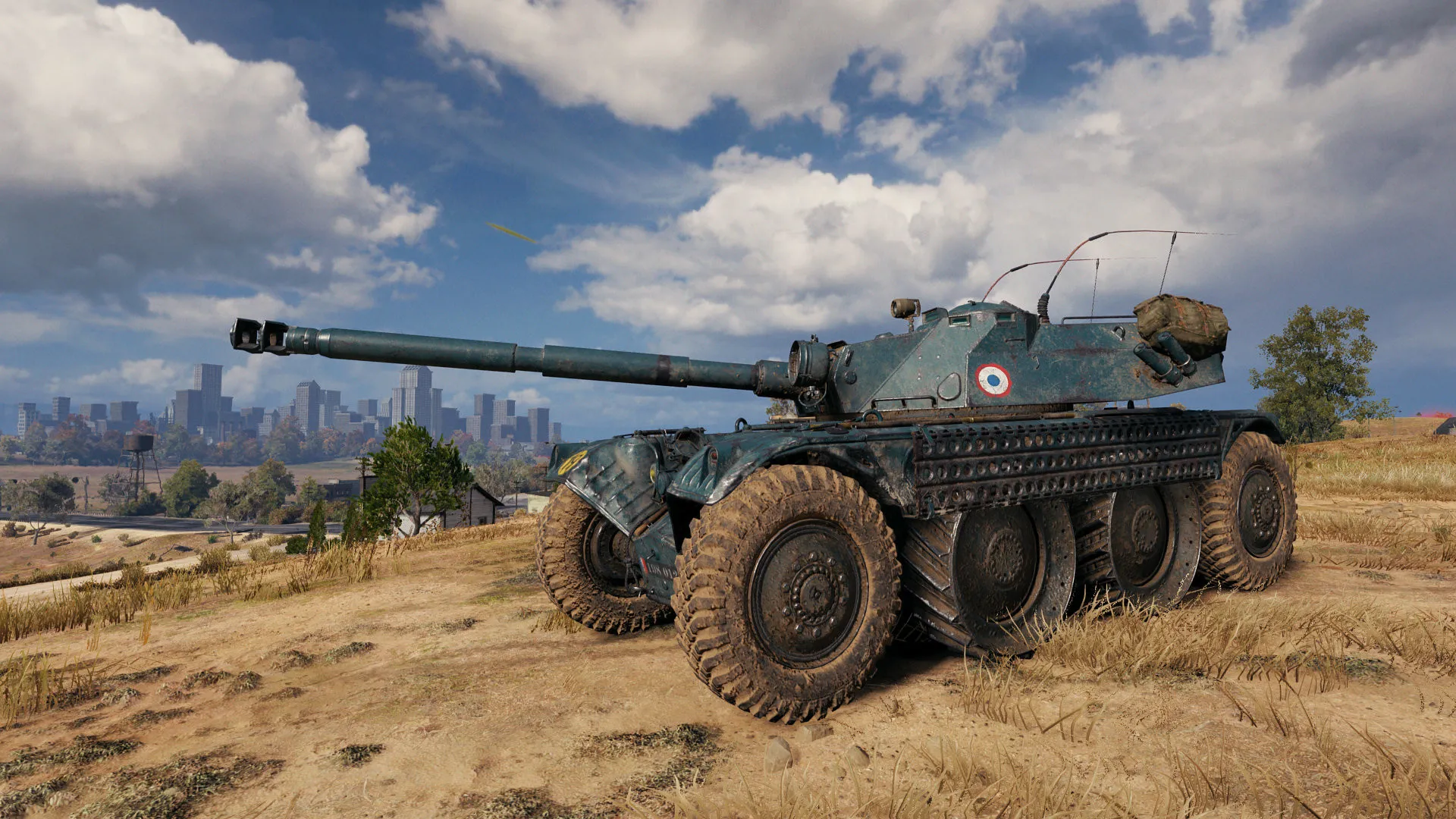
3. The View Range Ceiling: Why More Isn’t Always Better
View range determines how far your tank can potentially spot enemies. However, there is a hard cap: 445 meters. Any view range beyond this does not increase spotting distance directly, but it does help counter enemy camouflage.
Many players misunderstand this ceiling. They stack view range equipment expecting to spot enemies at 500+ meters, not realizing the cap prevents this. Instead, extra view range improves spotting within the cap by reducing enemy camouflage.
The View Range Myth
More view range does not equal more distance — it equals more consistency.
H4: Effective View Range
The real goal is not maximum view range, but optimal view range relative to enemy camouflage.
4. The Bush Meta: How Vegetation Shapes the Battlefield
Bushes are one of the most powerful tools in World of Tanks. They provide camouflage bonuses that stack with tank values, crew skills, and equipment. A single bush can make a tank nearly invisible; multiple bushes can make it untouchable.
The bush meta has evolved over the years. Skilled players know exactly which bushes provide the best concealment, which angles are safe, and how to fire without being spotted. Meanwhile, inexperienced players often sit in bushes incorrectly, exposing themselves or failing to spot anything.
Bush Mechanics
- Bushes block vision when opaque
- Firing reduces camouflage
- Multiple bushes stack bonuses
H4: The Double‑Bush Technique
Firing from behind two bushes allows players to shoot without being spotted — a technique many players never learn.
5. The Passive Scout Dilemma: When Doing Nothing Wins Games
Passive scouting is one of the most misunderstood roles in World of Tanks. Light tanks with high camouflage can spot enemies from safe positions, allowing allies to deal damage. This playstyle requires patience, map knowledge, and discipline.
Many players criticize passive scouts for “camping,” not realizing that spotting damage can win games more effectively than direct damage. A well‑placed scout can control an entire flank without firing a single shot.
Passive Scouting Tips
- Find high‑value bushes
- Avoid firing unless necessary
- Relocate only when safe
H4: The Patience Factor
Passive scouting rewards players who understand timing and restraint.
6. The Active Scout Challenge: High Risk, High Reward
Active scouting involves moving quickly to spot enemies through speed and maneuvering. This playstyle is dangerous but rewarding. It requires map awareness, timing, and the ability to read enemy movements.
Active scouts often die early because players rush into enemy lines without understanding spotting mechanics. Successful active scouting requires controlled aggression, not reckless speed.
Active Scouting Techniques
- Zig‑zag movement
- Ridge poking
- Timing enemy reloads
H4: The Art of Survival
Active scouts must balance aggression with caution to avoid early death.
7. The Spotting Delay: Why You Don’t See Enemies Immediately
Spotting is not instantaneous. There is a delay between when an enemy enters your view range and when they appear on your screen. This delay can be the difference between life and death.
Players often blame lag or bugs when enemies “pop up” suddenly, but this is a natural part of the spotting system. Understanding the delay helps players anticipate enemy movements and avoid ambushes.
Spotting Delay Factors
- Server tick rate
- Distance to enemy
- Camouflage values
H4: Predictive Awareness
Experienced players anticipate enemy positions before they appear.
8. The Vision Control Meta: How High‑Level Players Dominate
At high levels of play, vision control becomes the dominant strategy. Skilled players use bushes, terrain, and view range to control engagements. They spot enemies without being spotted, deal damage safely, and deny map control.
This creates a skill gap. New players struggle to understand why they lose vision battles, while veterans exploit every mechanic to gain an advantage. The vision control meta rewards knowledge and positioning over raw mechanical skill.
High‑Level Vision Techniques
- Double‑bushing
- Camouflage stacking
- Vision traps
H4: The Knowledge Gap
Vision control is the biggest difference between average and elite players.
9. The Map Design Problem: How Terrain Shapes Vision Battles
Not all maps are created equal. Some maps heavily favor vision control, while others minimize it. Open maps like Prokhorovka and Malinovka reward scouts and snipers. Urban maps like Himmelsdorf reduce the importance of spotting.
This inconsistency creates balance issues. Players who excel at vision control dominate open maps but struggle on city maps. Conversely, brawlers thrive in cities but suffer in open fields.
Map Categories
- Open vision‑heavy maps
- Mixed terrain maps
- Urban brawling maps
H4: Adapting to the Map
Players must adjust their playstyle based on terrain, not just tank type.
10. The Future of Spotting: Can the System Be Improved?
The spotting system in World of Tanks is both brilliant and flawed. It creates depth, strategy, and tension — but it also confuses new players and creates frustration. Improving the system requires balancing transparency with complexity.
Possible improvements include better tutorials, clearer UI indicators, and more consistent map design. However, simplifying the system too much risks removing the strategic depth that makes World of Tanks unique.
Potential Improvements
- Better in‑game explanations
- More intuitive spotting indicators
- Balanced map redesigns
H4: The Core Dilemma
Spotting is essential to the game’s identity — but also its biggest barrier to entry.
Conclusion
The vision control crisis in World of Tanks is not a flaw — it is a defining feature. Spotting mechanics shape every engagement, every strategy, and every victory. Understanding camouflage, view range, bushes, scouting techniques, and map design is essential for mastering the game.
While the system can be frustrating, it rewards knowledge, patience, and skill. Players who embrace vision control gain a powerful advantage, transforming from confused victims of invisible enemies into masters of battlefield awareness. In the end, vision control is not just a mechanic — it is the heart of World of Tanks.